Hormonal health

If menopause education has felt either overly clinical or weirdly dismissive, you are not imagining it. A new wave of authors is finally treating perimenopause and menopause as what they are: a whole body transition that affects energy, mood, sleep, metabolism, cognition, and identity.
Here are three standout reads that approach the same life stage from three different angles:
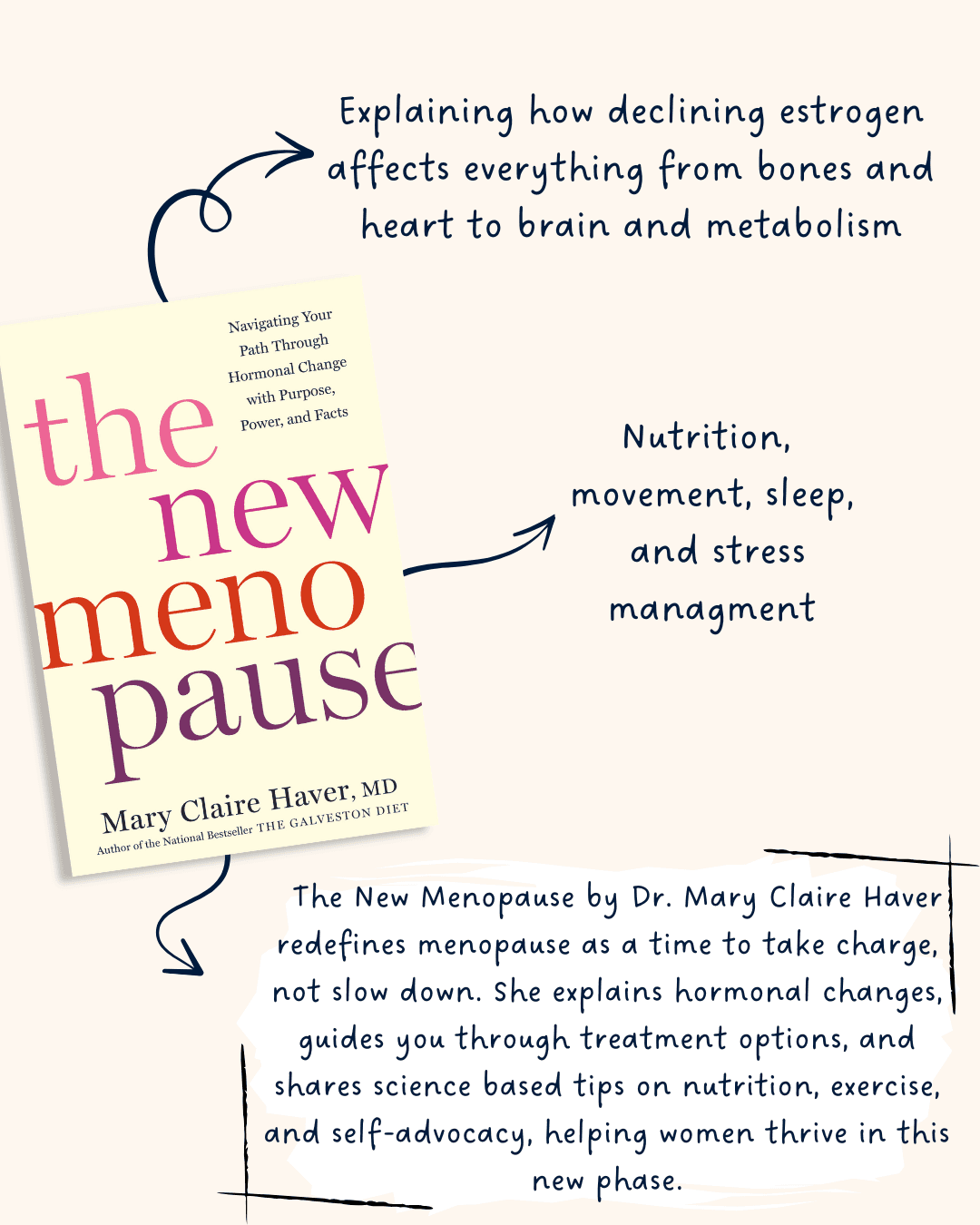
The New Menopause by Dr. Mary Claire Haver, MD PenguinRandomhouse.com+1
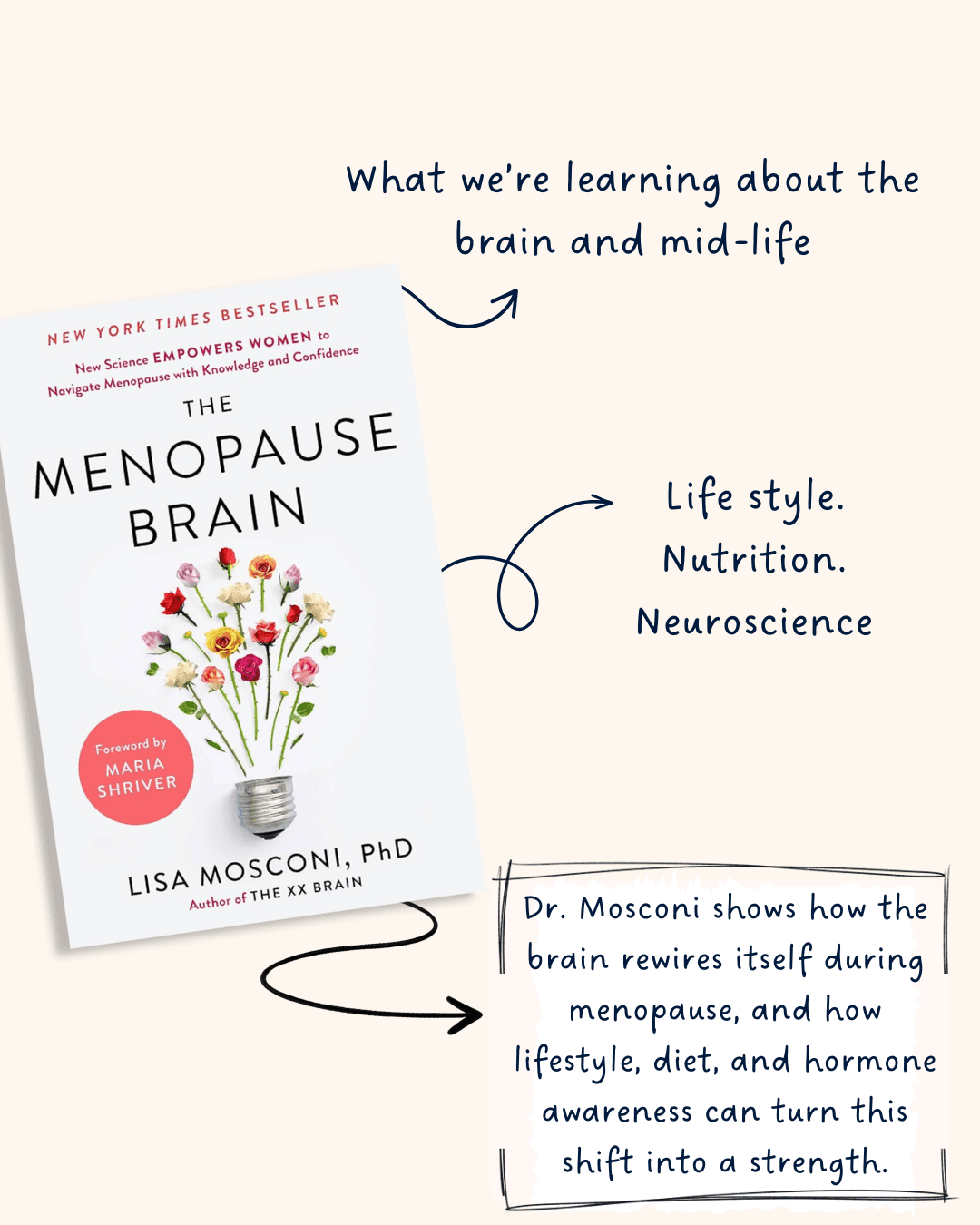
The Menopause Brain by Dr. Lisa Mosconi, PhD PenguinRandomhouse.com+1
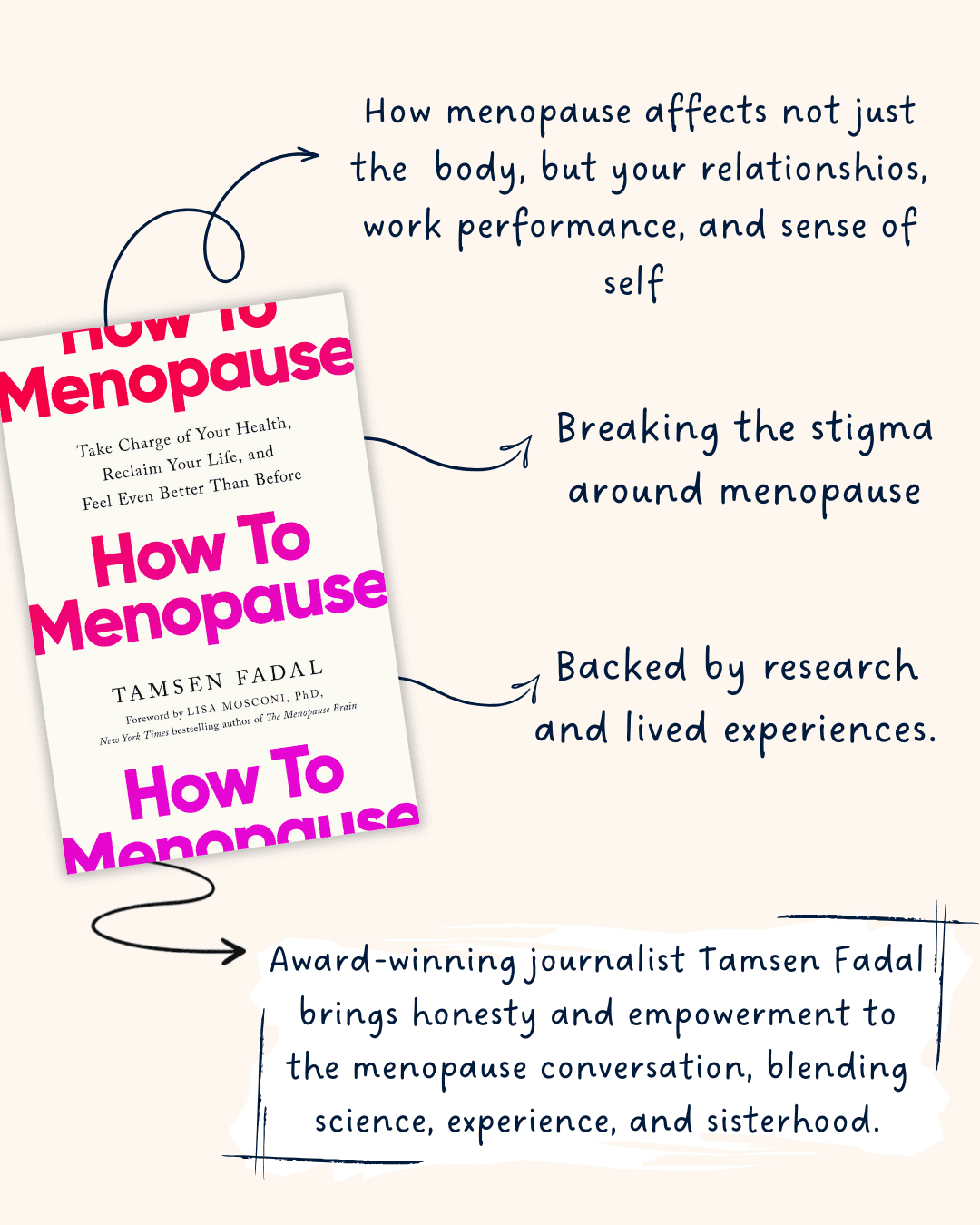
How to Menopause by Tamsen Fadal (often misspelled, it is “How to Menopause”) Vroman's Bookstore+1
Below, you will find what each book does best, the ideas they share, and a simple way to apply what you learn without spiraling into information overload.
1) The New Menopause (Dr. Mary Claire Haver): the practical medical playbook
Best for: the person who wants clarity, a roadmap, and a fact-forward overview of what is happening in the body and what options exist.
Dr. Haver’s book is positioned as a comprehensive toolkit for navigating hormonal change with “purpose, power, and facts,” and it covers symptoms that go far beyond hot flashes, including sleep, mood, sexual health, and musculoskeletal changes. Amazon+1
What it helps you do
Connect symptoms to physiology. Not just “this is normal,” but why it may be happening.
Prepare for a better clinical conversation. You walk in with language, timelines, and options.
Build a plan that is realistic. Not perfection, a system you can sustain.
Takeaways to try this week
Symptom mapping: Track sleep, temperature shifts, mood, and cycle changes for 2 weeks. Patterns make appointments more productive.
Strength as a non negotiable: If you do nothing else, add 2 days per week of resistance training. It shows up in nearly every credible menopause framework for a reason.
Protein and fiber basics: Aim for consistent protein at meals and fiber daily. You are building stability, not chasing hacks.
2) The Menopause Brain (Dr. Lisa Mosconi): menopause as a brain transition
Best for: anyone dealing with brain fog, anxiety, low mood, sleep disruption, or the feeling that their mind is “not behaving like before.”
Mosconi’s core premise is that menopause is not only a reproductive transition, it is also a neurological one. Her book frames brain health as central to women’s health during this phase. A well-known line from her interviews describes menopause as a kind of “renovation project” for the brain, with changes that can feel unsettling but may stabilize over time. What it helps you do
Reframe brain symptoms. Brain fog is not a personal failure, it can be part of the transition.
Prioritize sleep differently. Sleep becomes a primary lever, not a “nice to have.”
Think long term. Midlife brain support is also about later life cognitive health.
Takeaways to try this week
Protect your sleep window: Pick a consistent bedtime range and defend it like a meeting you cannot move.
Move for your brain, not just your body: Daily walks plus 2 to 3 weekly strength sessions is a strong baseline.
Eat to stabilize energy: Build meals around protein, plants, and healthy fats so blood sugar swings do not amplify fatigue and irritability.
3) How to Menopause (Tamsen Fadal): the guide you wish you got earlier
Best for: the person who feels overwhelmed by conflicting advice and wants a clear, human, step-by-step manual.
Fadal’s book is explicitly built as a “manual” that cuts through chaos, pulling from a large roster of experts across medicine, neuroscience, sleep, relationships, and lifestyle. It is structured to be highly usable, with practical tools and next steps.
What it helps you do
Stop guessing. It gives you a path from “I feel off” to “here is what I will do next.”
Address the full life context. Not just symptoms, also work, relationships, confidence, and self-trust.
Advocate for yourself. A recurring theme is learning how to navigate care and get taken seriously.
Takeaways to try this week
Create your “non negotiables” list: 3 habits you will protect (example: strength training, sleep routine, protein at breakfast).
Write your appointment script: 5 bullet points: top symptoms, timeline, what you tried, what you want to discuss, what outcome you want.
Audit your inputs: caffeine timing, alcohol frequency, late meals, scrolling at night. Small shifts can change sleep and mood fast.

The overlap: what all three agree on (even when they sound different)
Despite different styles, the shared message is consistent:
Menopause is whole body. Brain, muscle, metabolism, mood, sleep, libido, joints. This is not cosmetic, it is systemic.
Strength training matters. It is one of the most repeated, actionable foundations.
Sleep is a cornerstone. Many symptoms worsen when sleep breaks down, and improve when it stabilizes.
You deserve real options. Including evidence-based lifestyle tools and, for many women, a thoughtful discussion of hormone therapy with a qualified clinician.
How to read them without overload
If you want the fastest route to clarity:
Start with How to Menopause for a simple framework and next steps. Vroman's Bookstore+1
Add The New Menopause when you want more clinical detail and a structured toolkit. PenguinRandomhouse.com+1
Use The Menopause Brain to understand cognitive and emotional symptoms in a grounded way. PenguinRandomhouse.com+1
A simple 7 day plan
Day 1: List your top 5 symptoms and when they started
Day 2: Build a sleep routine you can repeat
Day 3: Add 2 strength sessions to your calendar
Day 4: Upgrade breakfast (protein + fiber)
Day 5: Walk 30 minutes, phone-free
Day 6: Draft your clinician questions
Day 7: Review what improved, what stayed, what you want to test next
Libré lens: what we take from these books
At Libré, we like information that leads to action. These books reinforce a clear standard:
Women deserve specific, research-informed guidance, not vague reassurance.
The goal is not to “push through,” it is to build a plan that supports energy, cognition, strength, and daily functioning.
Supplements can be part of a routine, but they should sit next to the fundamentals: sleep, strength, nutrition, and stress management.
Important note:This article is for educational purposes and is not medical advice. If you are experiencing symptoms or considering hormone therapy, talk with a qualified clinician.